
Razorpay CEO Harshil Mathur highlights India's leadership in real-time payments, stating it can foster numerous billion-dollar fintech companies capable of expanding globally. He draws parallels with the US internet boom and discusses how India's unique regulatory and private sector collaboration, exemplified by UPI, can be replicated in other emerging markets. Mathur also touches upon the opportunities and risks associated with leveraging AI in business.

The FCNR (B) stratagem relies on using public money to defend the rupee. The State subsidises foreign borrowing to attract dollars. This tool requires large-scale borrowing to make a material difference against a gross external flow of $11 billion a day. A commensurately large fiscal cost falls upon the exchequer. The ministry of finance will choose how much it is willing to spend in exchange for this round number, points out Ajay Shah.

Indian two-wheeler buyers are increasingly opting for feature-rich, higher-end variants and premium motorcycles, driven by technology, safety, and easier access to finance, according to TVS Motor Company. The company is also exploring alternative electric motor technologies to secure its supply chain amidst growing EV penetration.

Indian benchmark indices, Sensex and Nifty, experienced a significant downturn as escalating tensions in West Asia led to a sharp surge in crude oil prices, coupled with fresh foreign fund outflows and a weakening rupee.

US President Donald Trump has shared a map on Truth Social showing the Strait of Hormuz labelled as "Trump Strait".

'India should not trade away its energy security for temporary tariff relief. Neither signing a trade agreement nor stopping Russian oil purchases can protect it from future US action.'
State-run Punjab National Bank (PNB) is strategically planning to enter the wealth management segment by early 2027 and significantly expand its credit card portfolio, aiming to tap into lucrative markets largely dominated by private-sector banks.
Analysts predict that the US-Iran geopolitical conflict, upcoming quarterly earnings announcements, and fluctuations in crude oil prices will be the primary drivers of investor sentiment in the Indian equity markets.

The Finance Ministry has refuted allegations that US pressure influenced the decision to levy a 0.4 per cent Merchant Discount Rate (MDR) on select UPI payments. The ministry clarified that the NPCI guidelines prioritise RuPay credit cards on UPI to promote domestic alternatives and ensure a self-sustaining revenue model for smaller domestic companies, countering claims of favouring foreign payment providers.

Pakistan's government is exploring measures, including potential smart lockdowns and austerity, to reduce petroleum consumption. This comes after recent fuel price hikes driven by rising global oil prices and West Asia tensions, which have also raised concerns about oil supply disruptions. The government is also implementing a fuel relief scheme and faces public pressure over the price increases.

The story of the Khans is therefore not simply the story of four movie stars who have dominated Bollywood. It is the story of how four sharply differentiated identities became four enduring businesses -- and how each managed to remain relevant in an industry designed to replace yesterday's hero with tomorrow's sensation, points out Sandeep Goyal.

Indian benchmark indices Sensex and Nifty saw a significant rebound in early trade, driven by softer-than-expected US inflation data which has reinforced expectations of a less aggressive monetary policy stance from the Federal Reserve, providing relief to global risk assets.

A cultural festival at Badrinath Dham has ignited a major controversy due to a loud music and dance event, leading the Chamoli district administration to issue a show-cause notice to the Garhwal Scouts. Senior BJP leader Murli Manohar Joshi and the Shankaracharya Math have strongly condemned the event, citing violations of cultural and religious decorum and the sanctity of the holy shrine.

Union Communications Minister Jyotiraditya Scindia announced India's ambition to lead the world in 6G mobile technology and become a designer of global technology standards. Speaking at the Global Fintech Fest 2026, Scindia highlighted India's shift from being a technology market to a technology maker, emphasizing progress in 5G rollout, affordable data, and digital infrastructure driving fintech growth, while also stressing the importance of digital security.

Micron CEO Sanjay Mehrotra announced plans to significantly scale up the company's chip assembly and testing facility in India, moving from "vision to execution" in the nation's semiconductor ambitions. He highlighted the success of the Sanand, Gujarat plant, which is already producing "Made in India" memory chips, and the company's substantial engineering contributions from its Indian centres. Mehrotra also emphasised the critical role of memory chips in the AI era, driving Micron's growth.

External Affairs Minister S Jaishankar met his Chinese counterpart Wang Yi in Manila, reiterating that peace and tranquillity in border areas are prerequisites for normal India-China relations. He stressed the importance of mutual respect, interest, and sensitivity, while also raising concerns about market access, trade imbalance, and supply chain uncertainties.
The Finance Ministry has refuted allegations that US pressure influenced the decision to levy a 0.4% Merchant Discount Rate (MDR) on select UPI payments. It clarified that NPCI guidelines prioritise RuPay credit cards on UPI to foster a domestic payment ecosystem and that the MDR introduction aims to create a sustainable revenue model for smaller domestic companies, thereby protecting India's sovereignty in digital payments.
French aerospace and defence major Thales views India as a highly dynamic market for avionics, with significant growth potential as Indian airlines expand their fleets. The company, which has a substantial presence and MRO facilities in India, is also exploring opportunities to replicate India-developed solutions globally and sees increased use of AI in development.

Experts at a national symposium in Shillong discussed the role of Artificial Intelligence in tourism, emphasising that AI should support human judgment, local knowledge, and cultural values rather than replace them. Discussions highlighted the need for robust policies to address ethical concerns, safeguard livelihoods, and preserve cultural heritage while leveraging AI for innovation and sustainability in the tourism sector, particularly in Meghalaya.

India's markets regulator Sebi has launched 'Demat 2.0', a pilot project for tokenisation of corporate bonds, enabling atomic settlement through integration with RBI's wholesale CBDC. This new market infrastructure uses Distributed Ledger Technology (DLT) to make bond issuance, trading, and settlement faster and more efficient. India is the first country to issue corporate bonds natively on a distributed ledger with central bank digital currency settlement. Additionally, RBI Governor announced new UPI innovations: 'Tap & Pay' for faster POS transactions and MyUPI, an AI-powered customer support solution.

Tata Motors Passenger Vehicles (TMPV) is strategically expanding its international footprint by launching the Nexon, rebranded as Osprey, in South Africa, a move set to significantly boost its export volumes and solidify India's position as a major automotive export hub.

'It is a blunt and dangerous attempt to pressure India to sign BTA on one-sided terms.'

'Your retirement corpus isn't just a big pile of cash for 'one day' -- it is the salary you pay yourself when you no longer want to go to work.'
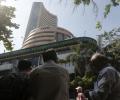
Indian benchmark indices Sensex and Nifty closed largely flat on Monday, recovering from early losses, as escalating tensions in West Asia and a sharp rally in crude oil prices weighed on investor sentiment, despite resilience in IT and consumer durables stocks.
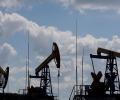
India's Russian crude oil imports reached a five-month low in September, dropping to 1.75 million barrels per day, as Indian refiners strategically diversify their energy supplies amidst evolving geopolitical landscapes and robust domestic demand, according to ship tracking data.

The Supreme Court has strongly criticised the exorbitant markup on cancer drugs by hospitals, calling it "carnage" and "broad daylight dacoity." The court highlighted a case where a cancer drug was marked up ten times its retail price and urged the Centre to implement a uniform 16% margin on all medicines. It also raised concerns about hospitals forcing patients to buy medicines from their in-house chemists.

Indian information technology (IT) stocks, led by Infosys, experienced a significant selloff, dragging the Nifty to a two-month low, primarily due to escalating West Asian tensions pushing crude oil prices higher, and concerns over upcoming large IPOs diverting funds from secondary markets. The sector is also grappling with the long-term implications of AI disruption.

The Supreme Court has taken suo motu cognisance of recent heinous crimes against minor girls and women in the Delhi-NCR region, highlighting a systemic failure in law enforcement. Citing parallels to the 2012 Nirbhaya case, the court demanded accountability from authorities and sought comprehensive reports on public safety measures and the utilisation of the National Database on Sexual Offenders.

US President Donald Trump has extended the USD 100,000 fee on employers for H-1B foreign workers for another year, citing a significant decrease in registrations from large IT outsourcing firms. This move, aimed at protecting American jobs and ensuring highly-skilled workers, also includes a separate proclamation for enhanced scrutiny of H-1B applications, particularly concerning potential layoffs of US workers.

Delhi Police conducted a 96-hour special operation in west Delhi, arresting 19 individuals, including six foreign nationals, and recovering narcotics valued at approximately Rs 5 crore. The operation targeted organised drug supply chains, leading to 17 cases registered under the NDPS Act and the seizure of various illicit substances.

Indian stock markets this week will be primarily influenced by a series of corporate Q1 earnings, the evolving geopolitical situation in West Asia, and fluctuations in crude oil prices, according to market analysts.

Indian benchmark indices, Sensex and Nifty, staged a moderate rebound after a significant correction in the previous session, driven by foreign fund inflows and a largely positive trend in global markets, though geopolitical tensions between the US and Iran continued to foster caution.

Indian benchmark indices Sensex and Nifty continued their upward trend for a second consecutive day, with the Sensex gaining over 800 points, driven by strong performances from heavyweights like Reliance Industries, ICICI Bank, and HDFC Bank, alongside positive cues from easing crude oil prices and robust IT sector earnings.
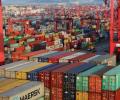
Civil Aviation Minister K Rammohan Naidu announced significant opportunities for Micro, Small, and Medium Enterprises (MSMEs) within India's rapidly expanding aviation sector. With Indian airlines ordering over 1,600 aircraft and the aerospace market projected to double by 2035, there's a massive scope for Indian suppliers to integrate into global aerospace supply chains, moving beyond assembly to design and manufacturing.
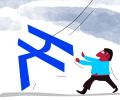
The Indian rupee experienced its sharpest single-day decline in eight weeks, settling at 94.83 per dollar, primarily due to escalating crude oil prices and persistent risk-off sentiment driven by heightened geopolitical tensions and limited foreign inflows.

GIS intelligence solutions provider Mirai Aerospace Systems and Software Solutions has signed an MoU with US-based GreenValley International Inc to strengthen India's geospatial and LiDAR remote sensing manufacturing base. The collaboration focuses on local assembly, manufacturing, technical support, and the development of AI-driven LiDAR applications, aiming to meet India's growing demand across various sectors.

Five years after the Tokyo Olympics were held without spectators, Japan's Asian Games in Nagoya are struggling to generate local enthusiasm, with many residents unaware of the event despite the return of fans.

On the morning of September 8, Karnataka Chief Minister D K Shivakumar paid a surprise visit to the Agricultural Produce Market Committee at Yeshwanthpur in Bengaluru.
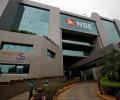
The National Stock Exchange of India's (NSE) mega Rs 22,569-crore initial public offering (IPO) was fully subscribed on the second day of bidding, driven by strong interest from qualified institutional buyers and non-institutional investors.

J R D Tata, chairman of the Tata group from 1938 to 1991, said that whenever he had to make a difficult decision, he would ask himself, what will be good for India, and what will be good for the Tatas. If he had a doubt, he would decide in favour of India. In the long run, it would turn out well for the Tatas too, he said, points out Arun Maira.
